From an image to an action
OpenDART
Vision-driven autonomous terminal guidance with OpenCV 5.
See the target. Estimate the approach. Change the next move.
A synthetic closed loop, with a separate real-image perception study.
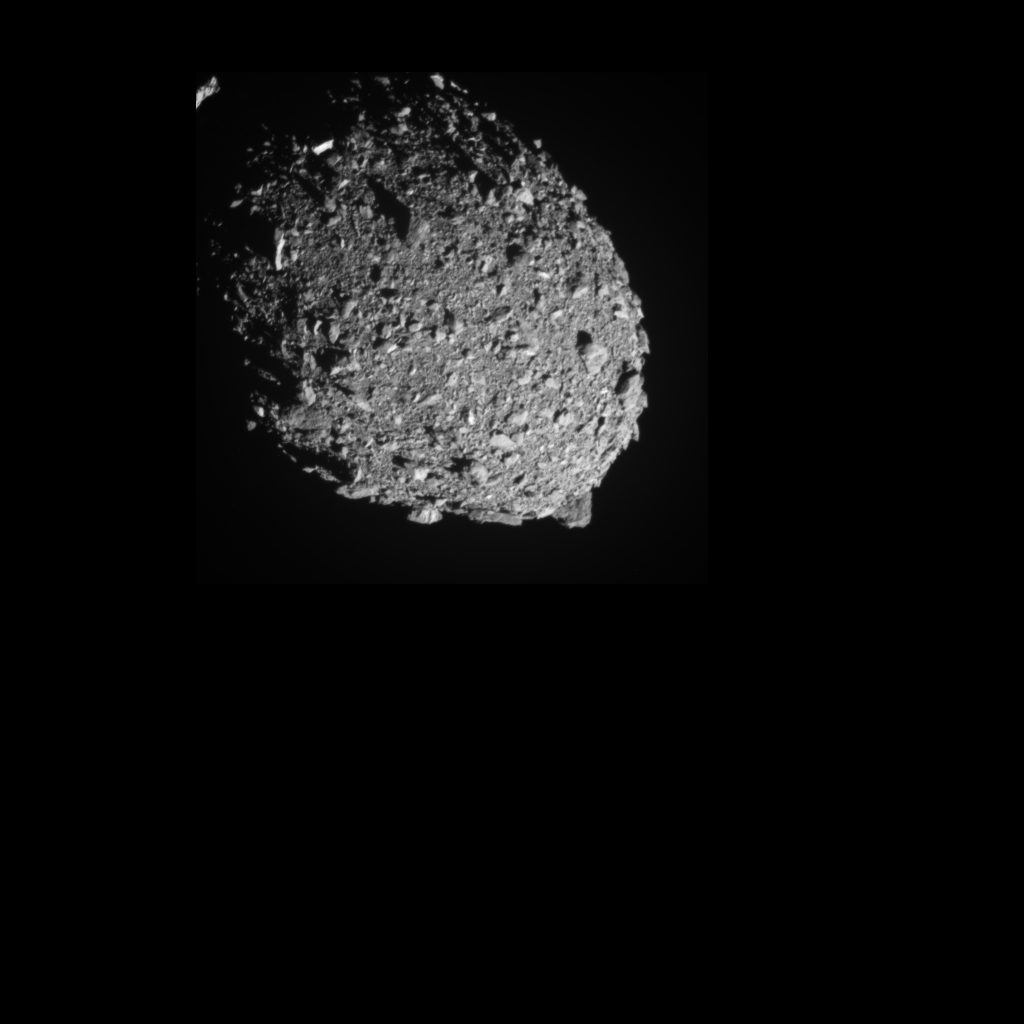
Explore the historical images →
01 / The feedback loop
What the camera sees
changes what happens next.
- CameraRendered pixels
- OpenCVDetect and associate
- State estimatePlanarEKF
- GuidanceEstimated-state ZEM
- MotionBounded force
- Next imageChanged geometry
Control commands change the simulated trajectory and the next camera image. Ground truth is used for rendering and evaluation; guidance uses the estimate.
02 / Try the approach
One loop. Four experiments.
Each run executes OpenCV, navigation and dynamics on AWS. Allow about 15 seconds. One computation runs at a time.
Experiment settings and negative controls
Presets use the same physical model, calibration and seed. Camera blackout extends the outage to 200–240 s. No visual updates disables measurements. Ballistic keeps image navigation active but disables thrust. The last two are negative controls and are expected to miss.
LIVE SYNTHETIC CLOSED LOOP · Fixed inputs only · No uploads or scientific parameters
03 / What we tested
Contact is an outcome.
It is not the whole story.
96 / 96Guided tested cases reached contact
4 / 4Negative controls missed
40 sBlackout followed by recovery
Image feedback improves the tested approach, but the estimator's full-state covariance undercovers. Known target size supplies monocular scale. These are results from a synthetic planar model, not real DART guidance validation.
Evaluation scope, statistics and evidence
Two appearances, 12 seeds and four conditions give 96 guided cases. Each 12/12 condition cell has Wilson 95% interval [0.758, 1.000]. Conditions use matched seeds; the result does not establish general reliability. Extended-blackout cases accepted an image update again at 240 s. Empirical undercoverage limits any statistical EKF-consistency claim.