The historical approach
Real DRACO
Flight Imagery
Run OpenCV 5 perception on historical DART spacecraft imagery.
Recorded imagery. Perception replay only, not closed-loop control.
Original calibrated PNG imagery
01 / A view that keeps changing
From a faint system
to resolved terrain.
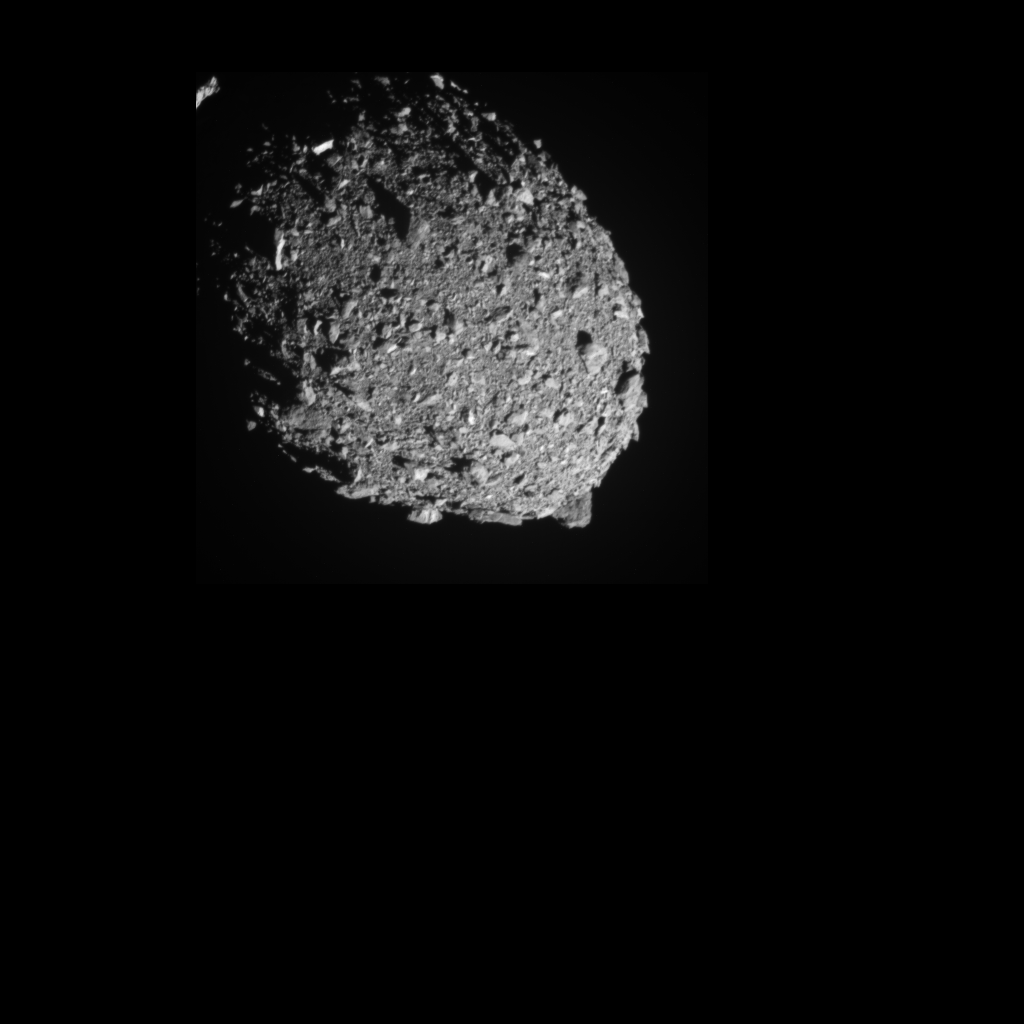
Six moments from the 4,000-image sequence. Open an image to see the original at full size.

Image metadata
dart_0401925587_47834_02_iof
2022-09-26T22:00:00.446Z
Phase: terminal
Partial: false
Early faint system; the frozen autonomous method has no selected target.
Official PDS collection
Image metadata
dart_0401928287_41530_02_iof
2022-09-26T22:45:00.321Z
Phase: terminal
Partial: false
Separated compact components during the terminal approach.
Official PDS collection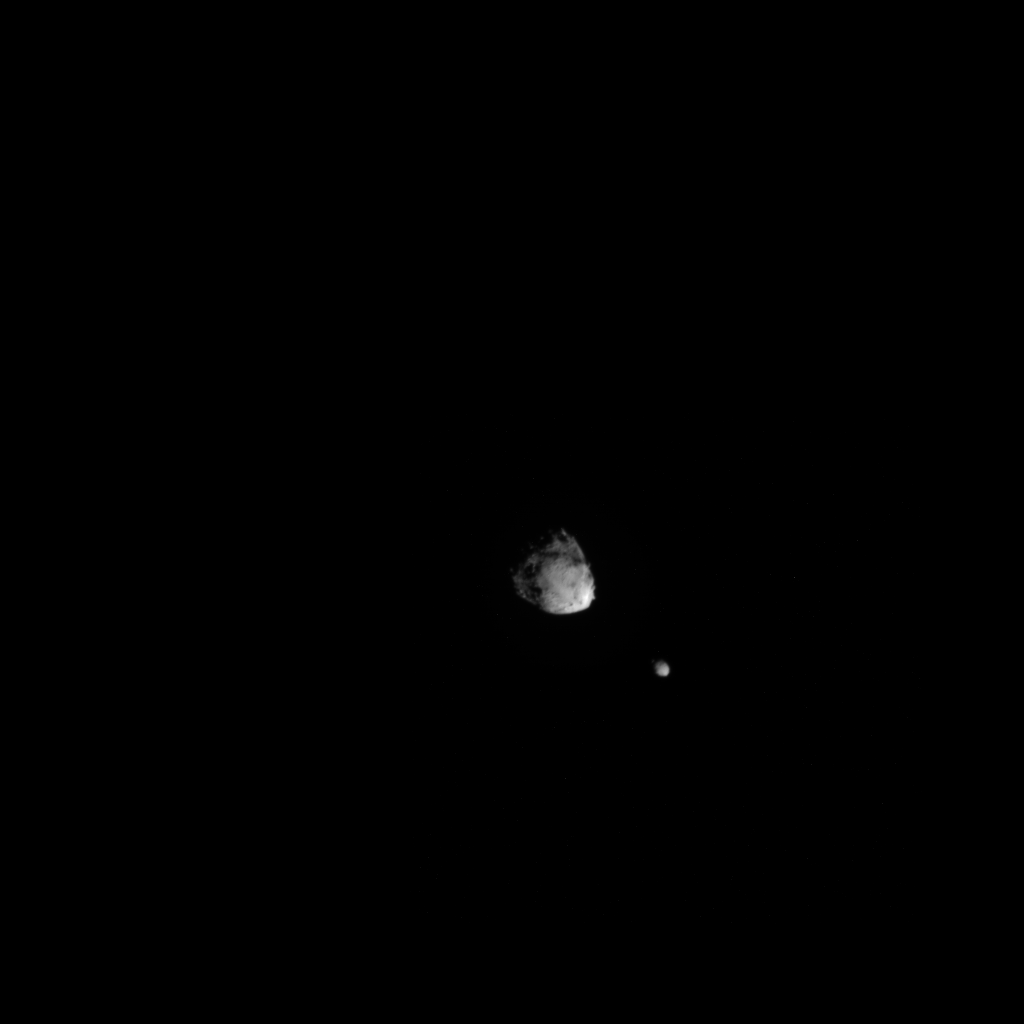
Image metadata
dart_0401929788_46871_02_iof
2022-09-26T23:10:01.429Z
Phase: final
Partial: false
Beginning of the FINAL collection; clearly separated bodies.
Official PDS collection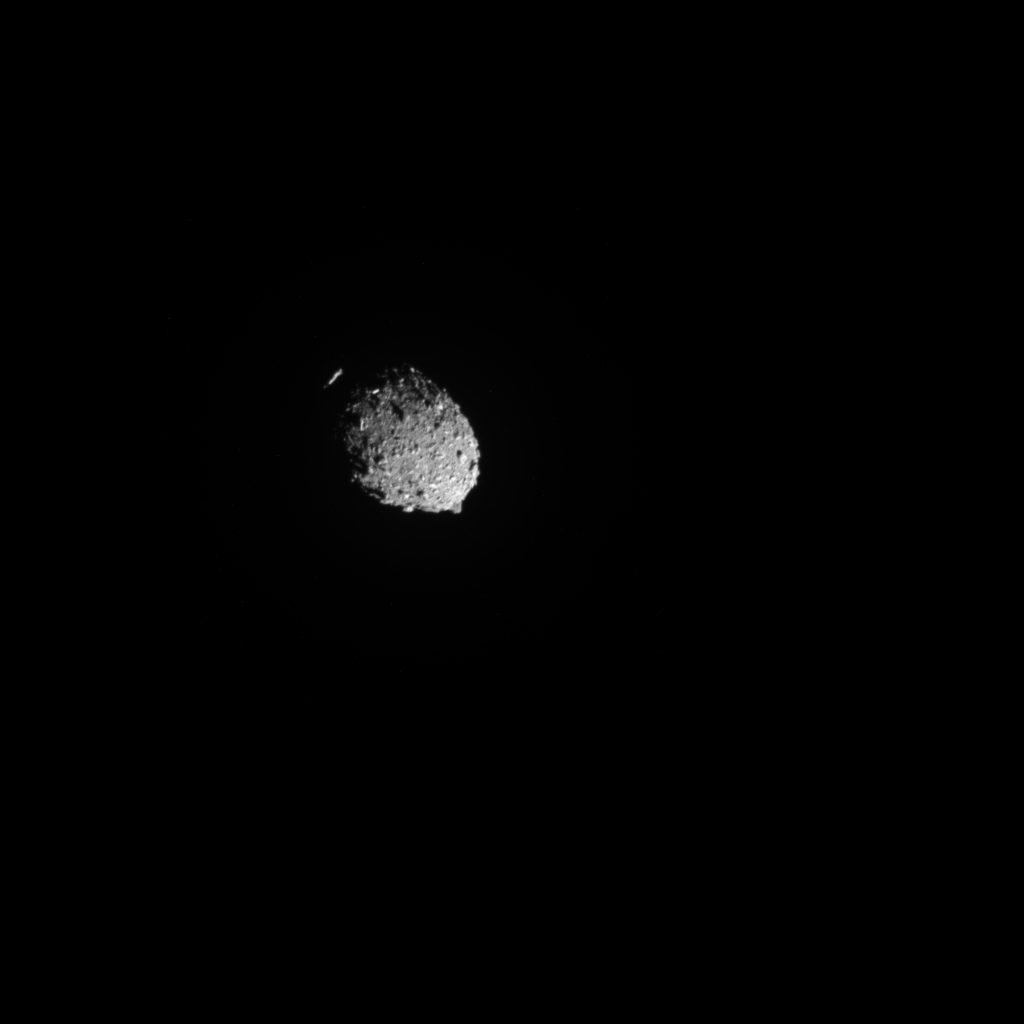
Image metadata
dart_0401930021_47540_02_iof
2022-09-26T23:13:54.442Z
Phase: final
Partial: false
Approximately thirty seconds before impact; resolved target region.
Official PDS collection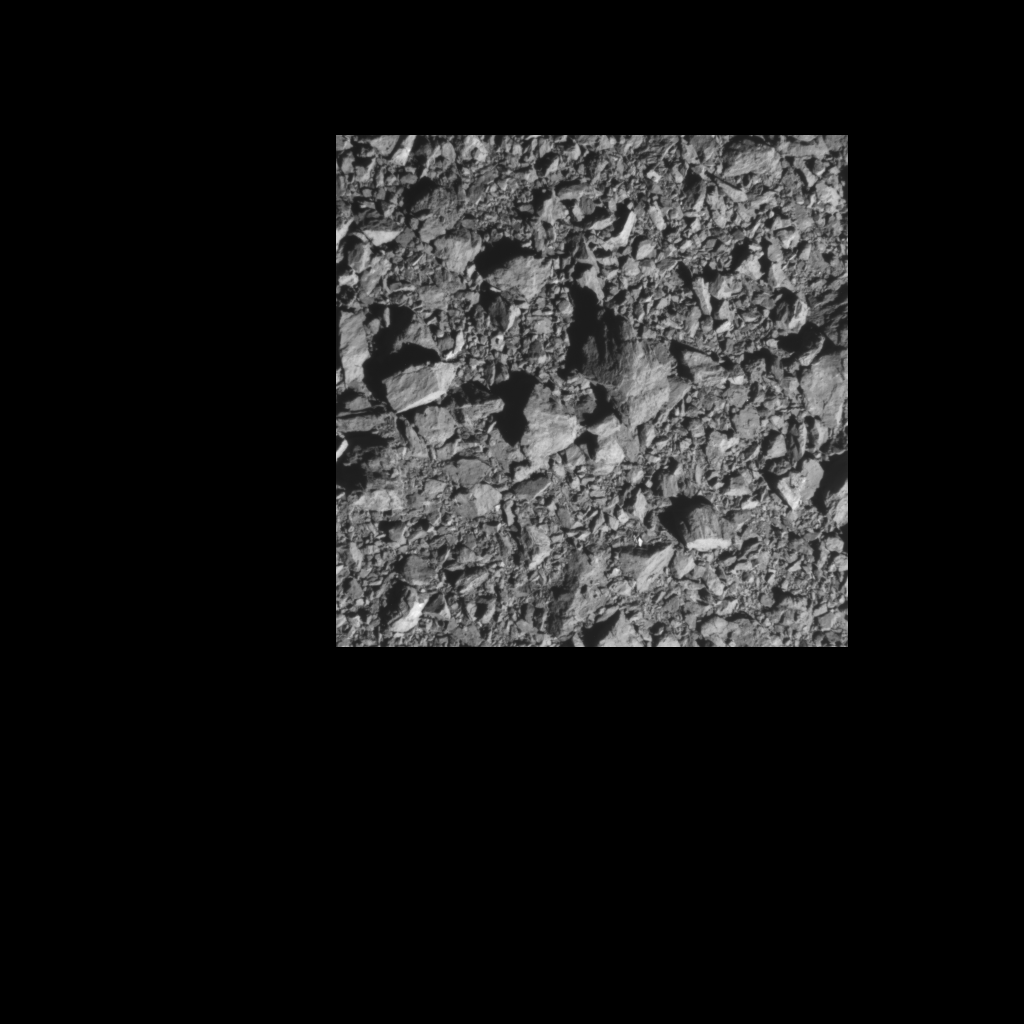
Image metadata
dart_0401930049_43695_02_iof
2022-09-26T23:14:22.365Z
Phase: final
Partial: false
Final complete image: visible terrain, not a complete isolated-body silhouette.
Official PDS collection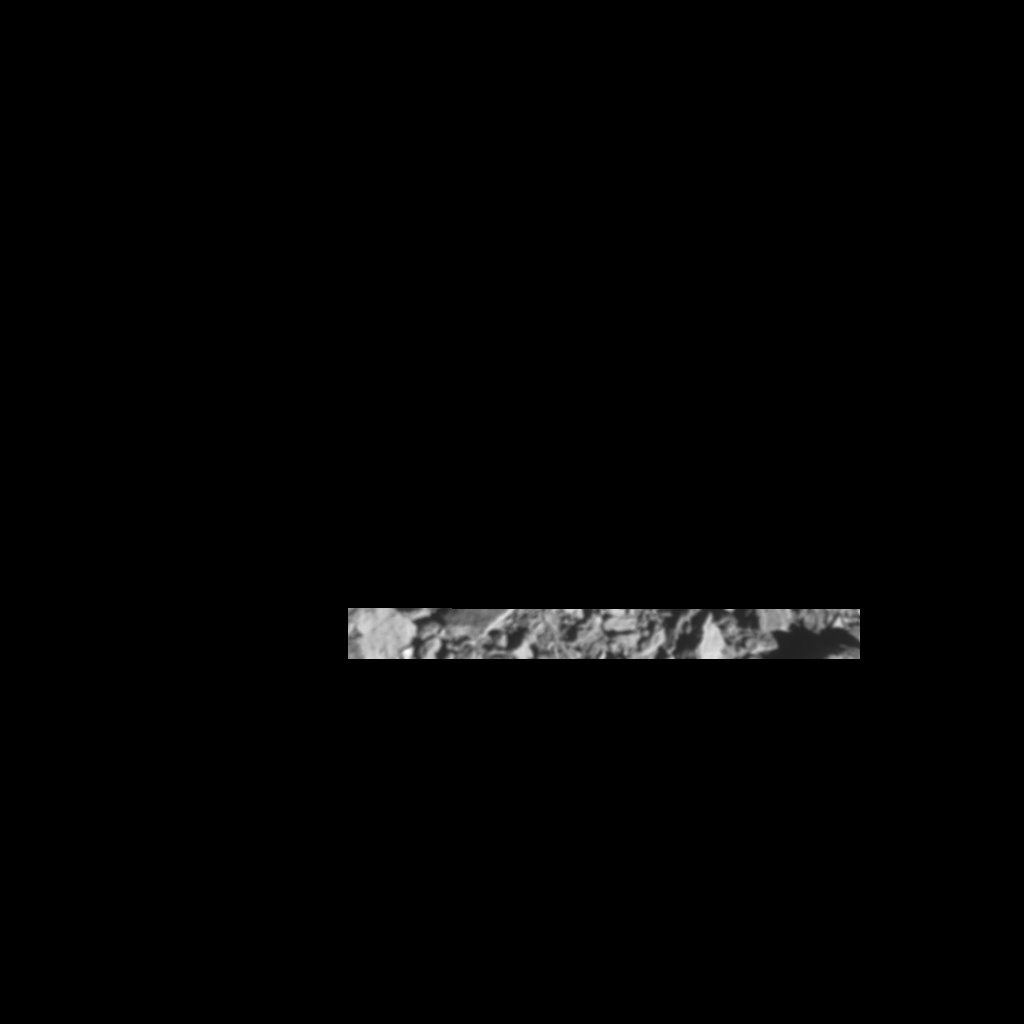
Image metadata
dart_0401930050_41838_02_iof
2022-09-26T23:14:23.328Z
Phase: final
Partial: true
Final partial transmission: only the received strip is visible; missing extent is not inferred.
Official PDS collectionSix more views and acquisition metadata
Image metadata
dart_0401927029_18290_02_iof
2022-09-26T22:24:01.856Z
Phase: terminal
Partial: false
Small binary imagery; autonomous target acquisition remains unresolved.
Official PDS collection
Image metadata
dart_0401929188_05477_02_iof
2022-09-26T23:00:00.601Z
Phase: terminal
Partial: false
Mid approach with a small companion region.
Official PDS collection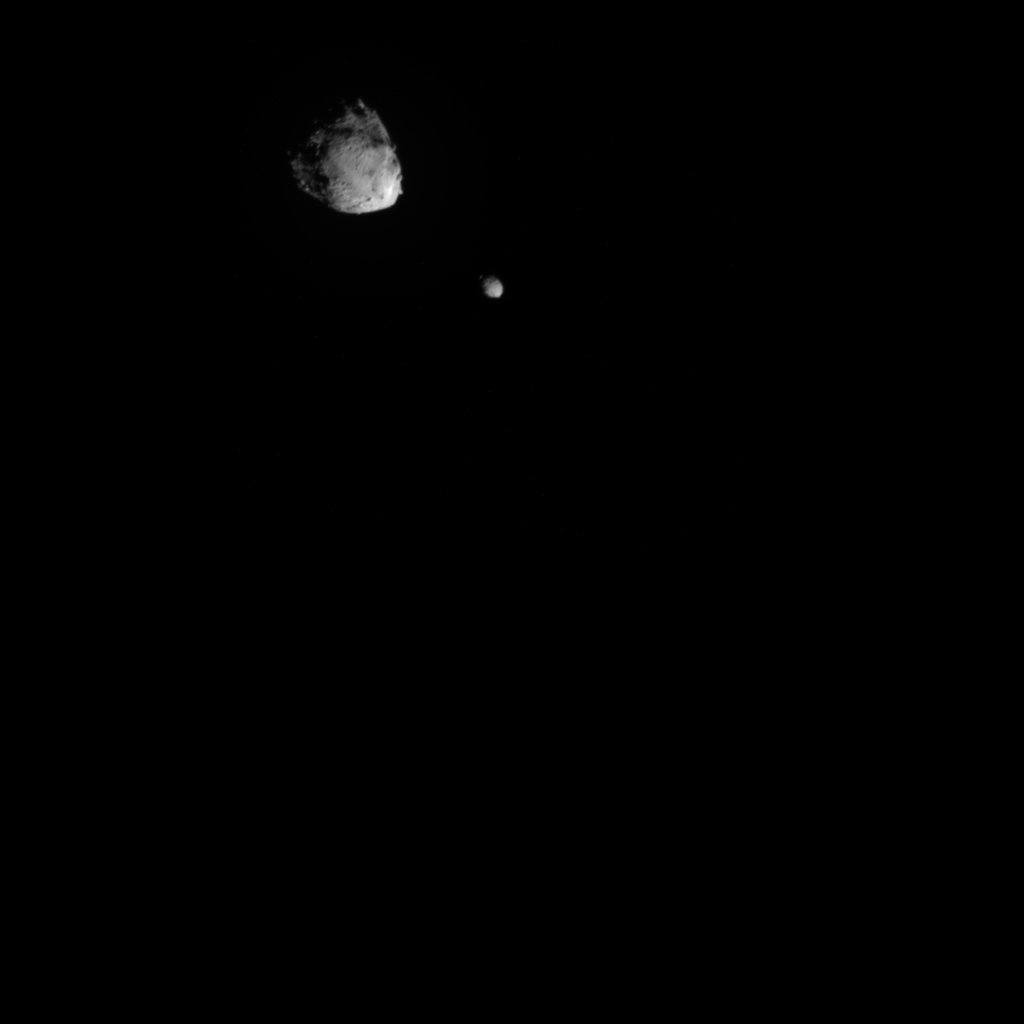
Image metadata
dart_0401929856_16899_02_iof
2022-09-26T23:11:08.829Z
Phase: final
Partial: false
Early FINAL binary imagery; this live analyzer uses autonomous mode.
Official PDS collection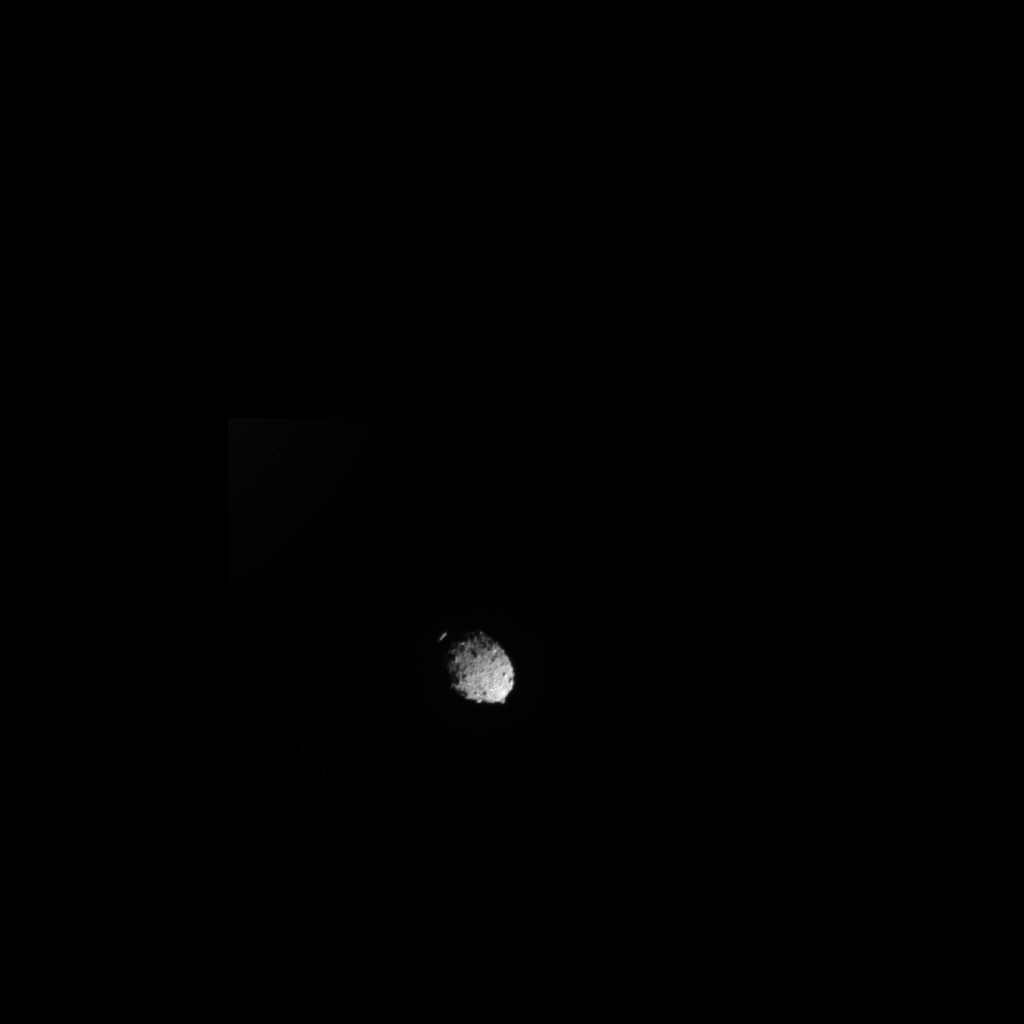
Image metadata
dart_0401929991_06956_02_iof
2022-09-26T23:13:23.631Z
Phase: final
Partial: false
Approximately one minute before impact; growing visible body.
Official PDS collectionImage metadata
dart_0401930042_08549_02_iof
2022-09-26T23:14:14.662Z
Phase: final
Partial: false
Approximately ten seconds before impact; surface detail and fragmentation.
Official PDS collection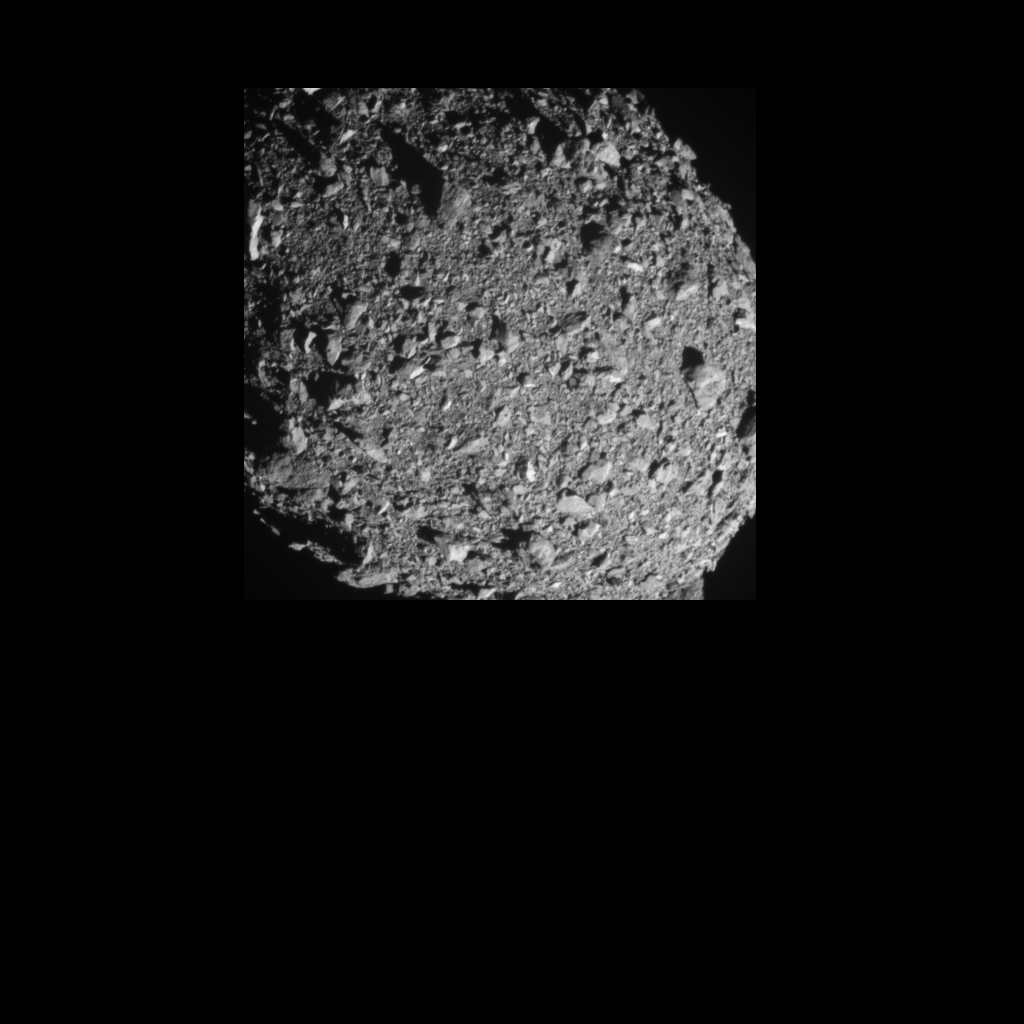
Image metadata
dart_0401930045_02979_02_iof
2022-09-26T23:14:17.551Z
Phase: final
Partial: false
Resolved terrain approaching the available image boundary.
Official PDS collectionAcquisition UTC comes from PDS4 XML. Approximate time to impact uses 2022-09-26T23:14:24.183Z. Stored PNG orientation is retained; PDS labels describe a Bottom-to-Top display convention.
02 / Look closer
Analyse a real DRACO frame.
Choose one of the original images. Compare it with a new perception result from the server.
Runs OpenCV 5 on AWS. Fixed images only; no uploads or tuning parameters.
Choose a frame to begin. An unresolved target is a valid result.
Technical state, image metadata and provenance
How the analysis is computed
The method needs the images that came before this one. Validated past-only state is restored immediately before the selected image, then that original frame is processed afresh. No current-frame target label or stored overlay supplies the result.
Early images may have no selected target. Resolved terrain is represented by a coarse visible region, not a physical centre. The final partial transmission shows only the received strip; missing extent is unknown. Exact states, identity status and hashes are available with each result.
03 / The complete sequence
Recorded DRACO replay.
All 4,000 historical images, accelerated into about 67 seconds.
Historical imagery, not closed-loop control.
Autonomous and operator-assisted tracking
The replay shows autonomous and operator-assisted tracking side by side. Operator assistance is one target designation on a reviewed development frame at 23:11:08.829 UTC, with no later manual correction. The technical mode name in the original replay is human-designated mode.
This browser-compatible presentation copy retains the original frame sequence. Spacecraft commands cannot change subsequent prerecorded images, so this replay tests perception and tracking, not real guidance.
04 / Measure the agreement
Real-image held-out benchmark.
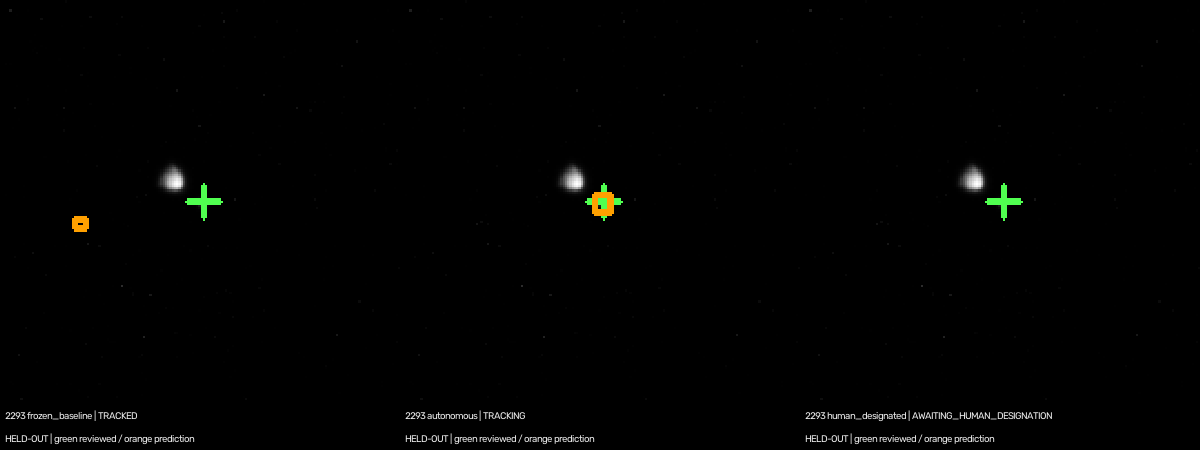
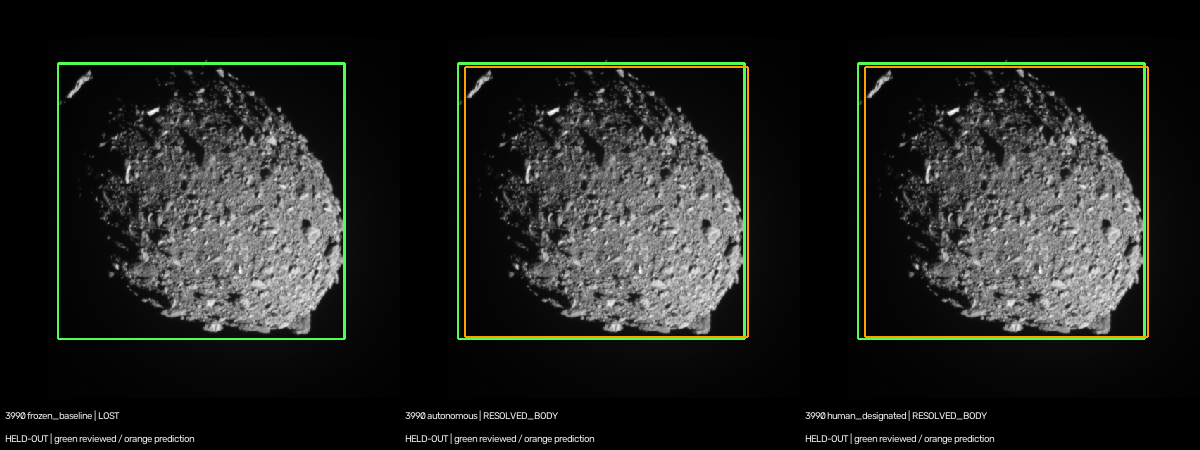
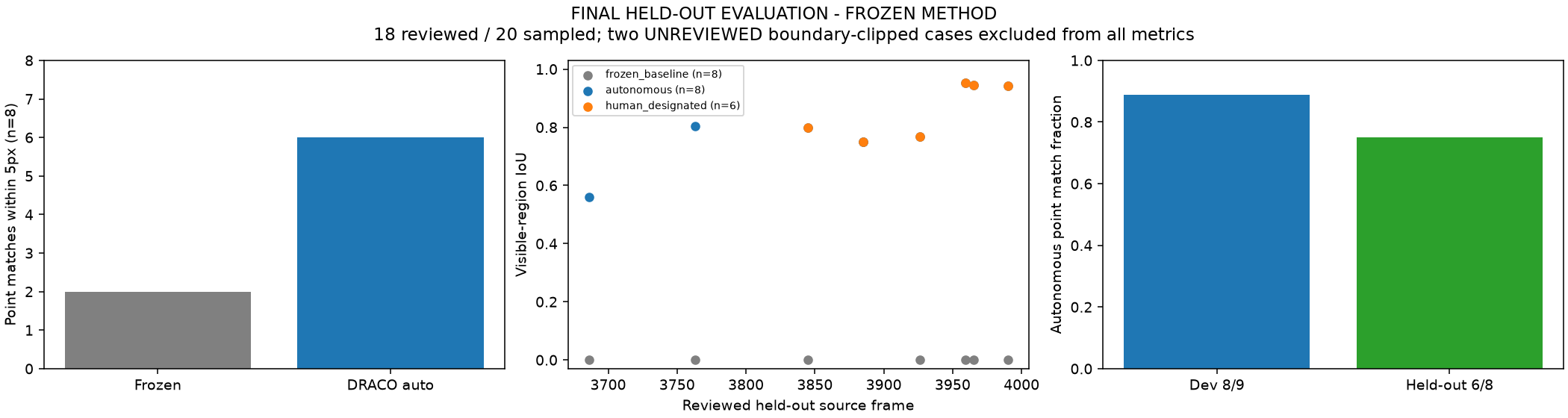
18 of 20 sampled frames were manually reviewed.
Two boundary-clipped cases were excluded. There are no reviewed labels in the final ten seconds.
| Measure | Original baseline | DRACO autonomous |
|---|---|---|
| Compact points within 5 px | 2/8 | 6/8 |
| Median point error when selected | 82.483 px, n=6 | 1.218 px, n=6 |
| Resolved-region detection | 1/8 | 8/8 |
| Median visible-region IoU | 0, n=8 | 0.802, n=8 |
| Region IoU ≥0.3 | 1/8 | 8/8 |
Operator-assisted tracking has median IoU 0.871, n=6 on six eligible later regions. Autonomous tracking has the same median on the same six-frame subset. This does not show that operator assistance is more accurate.
Sample counts, exclusions and measurement limits
18 reviewed / 20 sampled: eight compact labels, eight resolved-region labels and two uncertain labels. The two boundary-clipped cases remained UNREVIEWED. They were excluded, not counted as failures, negatives, partial frames or zero-IoU examples.
Point-error medians are conditional on selection; the selected frames differ between methods. Two early autonomous targets were unavailable. Visible boxes describe the received terrain, not a physical centre or range. Uncertain labels support abstention observations only.
This small manually reviewed sample limits generalisation. No method was retuned after evaluation. The synthetic simulation remains the separate causal control evidence.
Representative annotated comparisons
Green: manual review. Orange: prediction. The columns show the original baseline, autonomous tracking and operator-assisted tracking. Display crops were made after inference.